

This is a series I’m starting on voting rights and registration. With the 2026 midterms on the horizon—and a lot riding on the next two years—it feels important to break down how voting actually works.
For every recent election, I’ve made it a tradition to watch Steve Kornacki break down the map in real time. It’s part analysis, part spectacle—and a reminder of how much of our political system we experience as a show instead of something we’re actively navigating.
It’s easy to love the spectacle if you’re a politics nerd like me. It’s harder to understand the systems behind it.
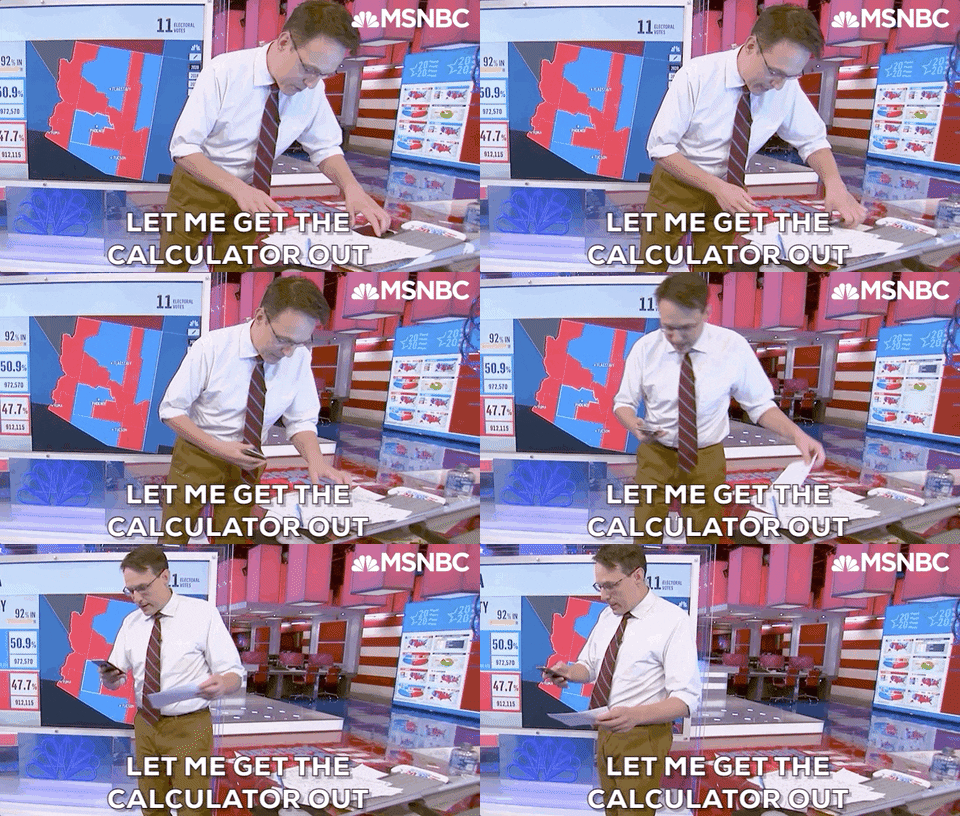
The right to vote is a cornerstone of democracy, but in the United States we often treat it like a spectator sport. Every four years, we’re glued to the screen for the scandals, the debates, and the endless mudslinging.
Yet for all the money and attention poured into election season, most people are still left guessing how the system actually works. It’s not always as simple as signing up, showing up, filling in a few bubbles, and walking away with a sticker. In the United States, we don't have one single voting system; we have 50 different ones, each with its own set of rules, deadlines, and "system requirements."
Let’s be honest: voter registration isn’t designed for ease. If it were, we’d have universal automatic registration and Election Day would be a national holiday. But that’s not the system we have. Whether you’re a first-time voter, a newly naturalized citizen, or someone who hasn’t been to the polls in years, understanding the basics is the first step to making sure your voice is actually heard.
Registration: The Entry Point
If you think you can wake up and go up to the polls on Election Day without ever having registered, think again. You must be registered to vote in your state’s voter system.
You can usually register online, by mail, or in person through a government agency like the DMV. Twenty-five states as well as the District of Columbia offer automatic voter registration. This is where your information is used to register you unless you opt out.
To register, go to Vote.gov, and it will route you directly to your state’s official registration page.
You’ll fill out a form with:
Your name and address
Date of birth
A driver’s license number or the last four digits of your Social Security number
If you prefer, you can register in person at the DMV or a local election office as well as mail in a registration form,
Deadlines and Primaries: Where Timing and Party Matter
We’ve all seen someone online complaining that we don’t have good candidates—there’s no one representing their values, no one taking certain positions, no one refusing certain types of money (I’ll get into PACs another time).
That’s because by the time the general election rolls around, those choices have already been narrowed down. That’s why primaries are just as important as the general election.
Every step in this process runs on a clock. If you miss a deadline, it doesn’t matter how motivated you are—you won’t be able to vote.

To find your deadlines, go to Vote.gov or Vote.org. You can look up:
Registration deadlines
Mail ballot request deadlines
Mail ballot return deadlines
Early voting windows
Write them down. Put it in your calendar. Set alarms or reminders. Don’t rely on your memory here.
Primaries are elections that decide which candidates appear on the general election ballot. This is an important step a lot of voters miss. If you don’t participate in your state’s primary, you’re accepting the choices other voters made for you.
Another quiet gotcha: party affiliation can determine whether you’re allowed to vote in a primary.
I learned this the hard way in my twenties. When I lived in New York City, I registered as an independent. I didn’t feel like a Democrat and I certainly wasn’t a Republican. What I didn’t know is that New York has closed primaries. So when the primary came around, I was locked out.
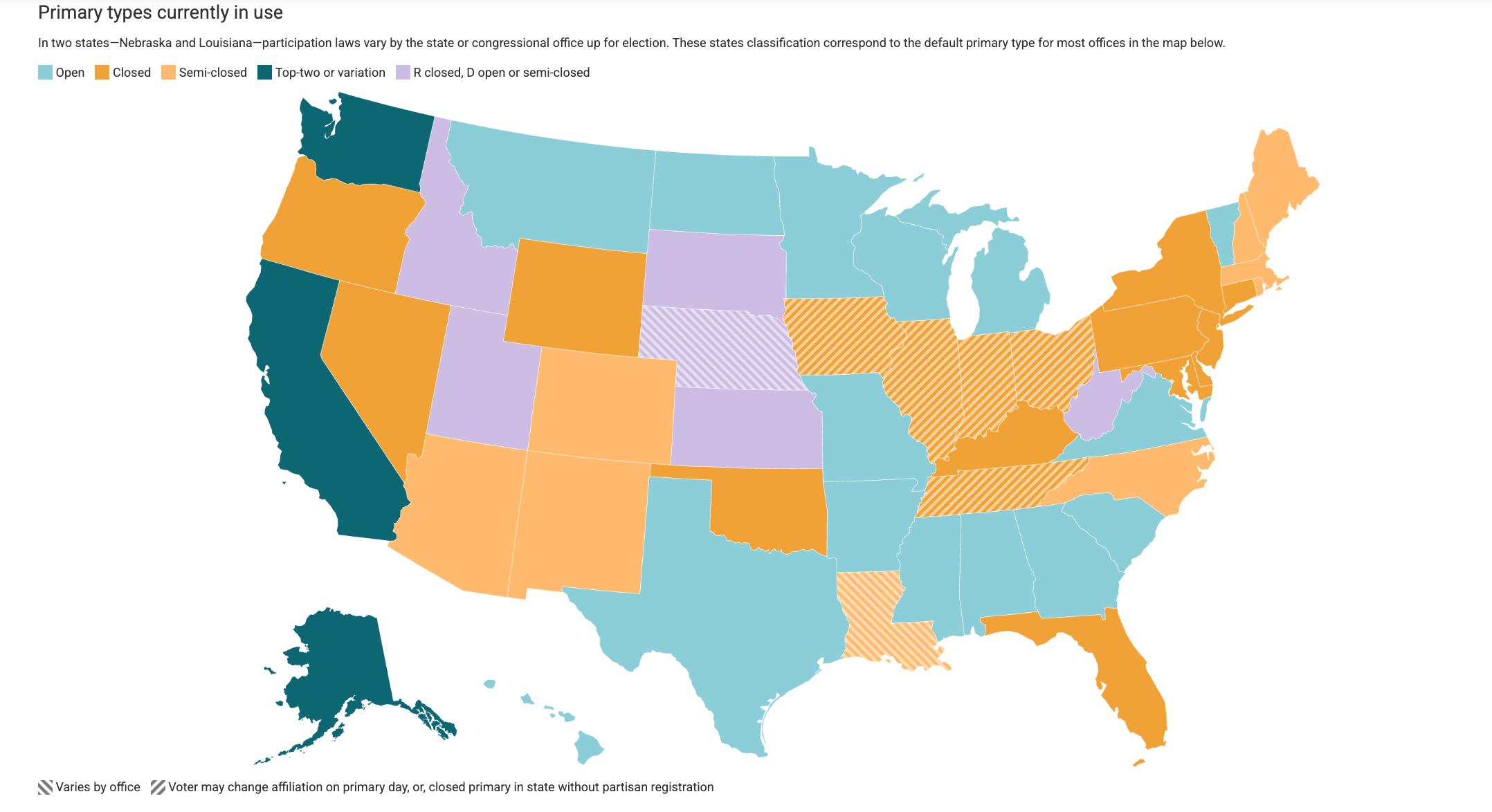
Depending on your state, you’ll fall into one of these systems:
Open primary – You can choose which party’s primary to vote in
Closed primary – You must be registered with a party in advance
Semi-open / semi-closed – Rules vary, but affiliation may still matter
If your state has a closed or semi-closed primary and you’re not registered with a party, you may not be able to vote in that primary at all.
Check your state’s rules ahead of time using Vote.gov. If needed, update your party affiliation before the deadline.
The Ballot: What You’re Actually Voting On
Your ballot is the full list of decisions being made in that election. It’s not just the Presidential Race. Most people focus on the top of the ballot and move on. But the state and local sections often have the most immediate impact on your day-to-day life.
Today’s school board, city council, or state race is often tomorrow’s national headline. These are the pipelines. Candidates don’t just appear on the national stage. Many of them build their way up through smaller, local offices first.
Depending on where you live, your ballot may include:
Federal offices like President or Congress
State positions like Governor or Attorney General
Local roles like mayor, city council, or school board
Ballot measures, which are laws or funding decisions voters approve directly
Voting Methods: How You Cast a Ballot
Once you’re registered and verified, the next step is choosing how you’re going to vote. The options vary depending on where you live, but they generally fall into three categories.
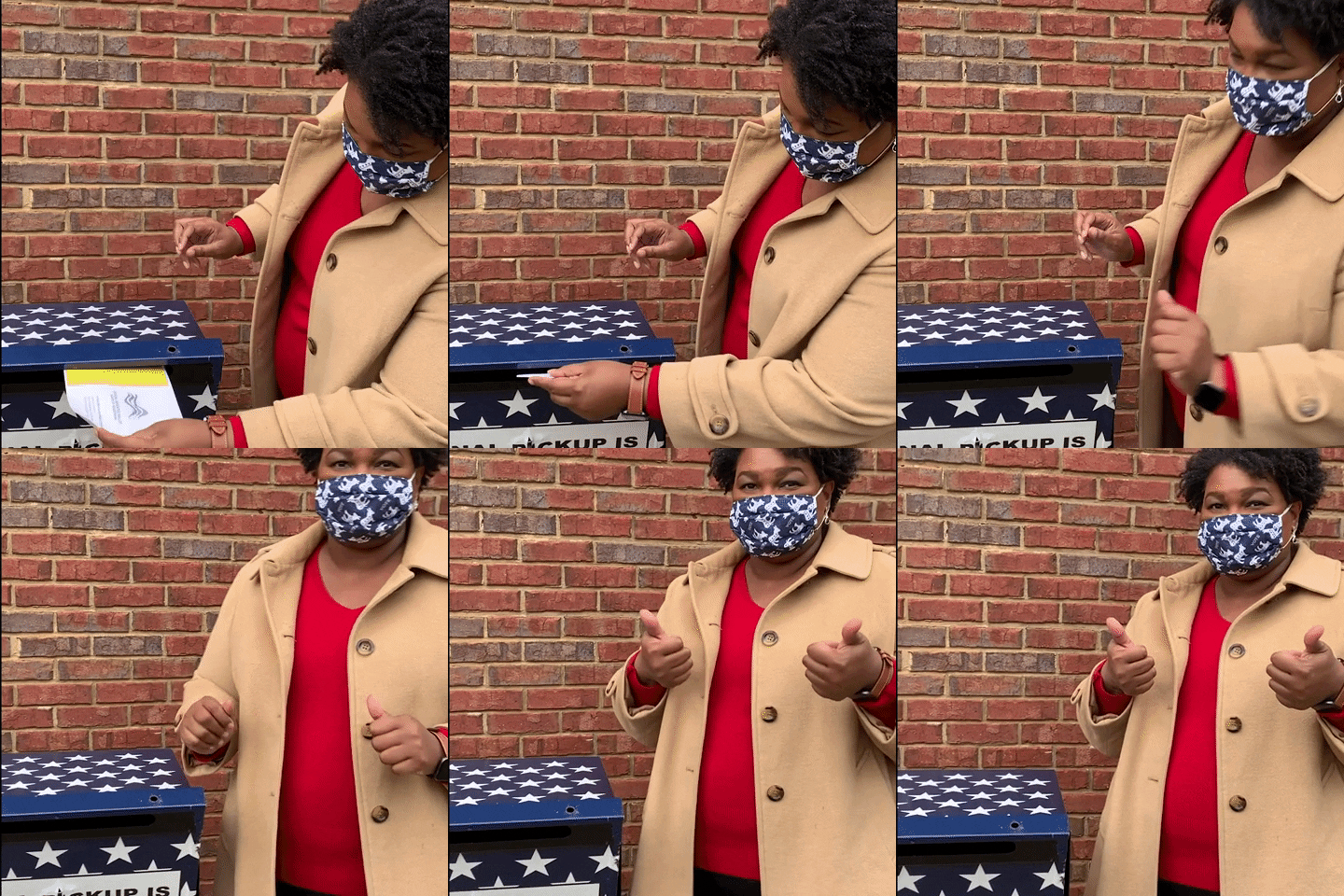
In-Person on Election Day
You go to your assigned polling place on Election Day and vote there.
You’ll check in, follow instructions (paper ballot or machine), and submit your vote before leaving.
Early Voting (In Person Before Election Day)
Some states allow you to vote in person before Election Day during a set window.
The process is the same as Election Day, just earlier and often with more flexible timing and less wait times.
Mail-In or Absentee Voting
You fill out your ballot remotely and return it by mail or at a designated location.
Some states send ballots automatically. Others require you to request one in advance.
No matter the method, the goal is the same: complete your ballot and return it according to your state’s rules.
What Happens After You Vote
You’ve done the hard apart, and posted the obligatory selfie with your “I Voted” sticker. You’re done. Your ballot isn’t.
Counting, Reporting, & Official Results
After the polls close, election officials begin counting the votes. This doesn’t happen all at once. Ballots are processed and tallied over time. Different ballot types get counted at different points.
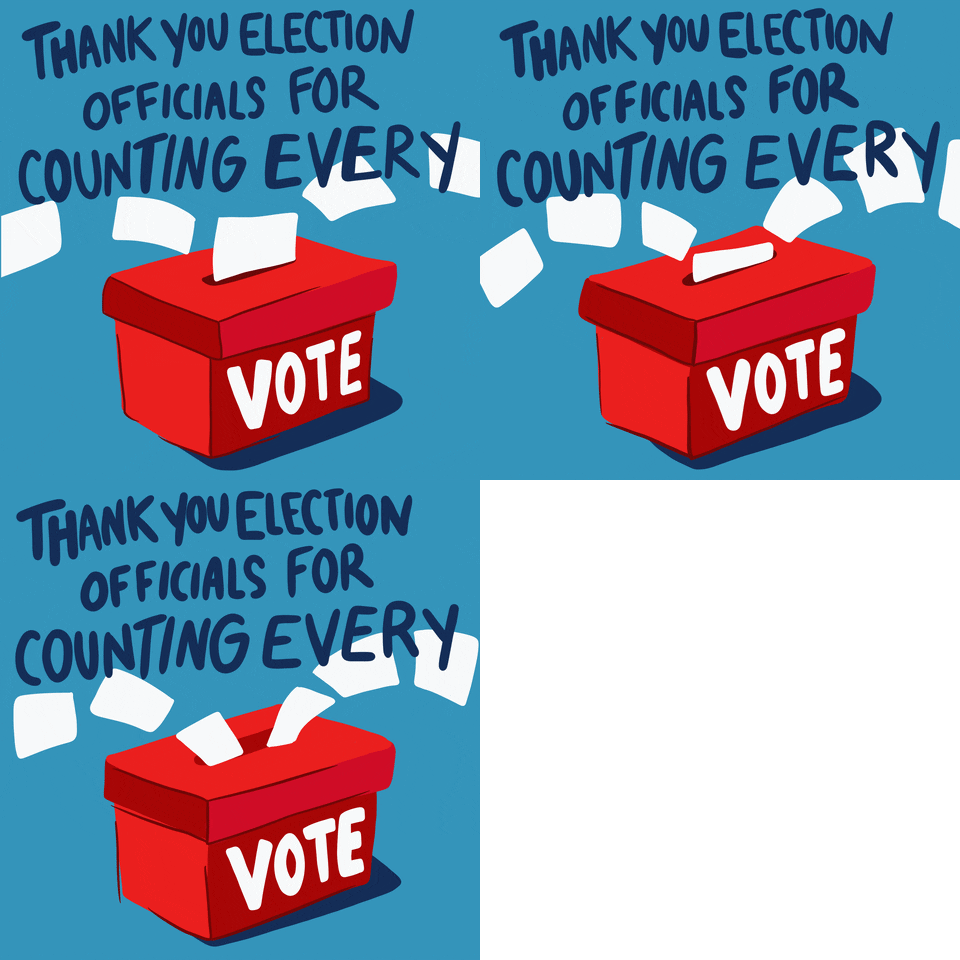
As votes are counted, results are shared publicly. News organizations report updates in real time and may project winners based on the data available. These projections are informed estimates—not official results.
You’ll often see reports showing only a percentage of votes “in” at any given time—the count is still in progress. Unless you’re staying up until 2–3am—and some of us do—you likely won’t hear a final outcome that night. Sometimes it takes a few days for the full picture to come into focus.
We treat elections as something to watch. A game between two parties. One wins, the other loses. Something akin to the Olympics where we see extraordinary people doing extraordinary things.
The spectacle makes it feel like it’s happening to other people—somewhere else, far away from our day-to-day lives.
But its not.
If we don’t actively participate in our Democracy, decisions get made without us. Our voices go unheard. Your voice is the most powerful thing you have in a democracy. Don’t let it be silenced.