
Voting Rights Act & Gerrymandering
What the Recent Supreme Court Decision Means for the Future.

This is a series I’ve started on voting rights and how the system works. With the 2026 midterms on the horizon—and a lot riding on the next two years—it feels important to break down how voting actually works. Check out the first post here.
One thing that was constantly repeated by the staff at KamalaHQ in 2024 was “We are Not Going Back.” I remember Kamala herself repeating it as often as “When We Fight We Win.” As she said in her closing speech to staff: “Sometimes the fight lasts longer than we think, and now is the time to roll up our sleeves and get to work.”
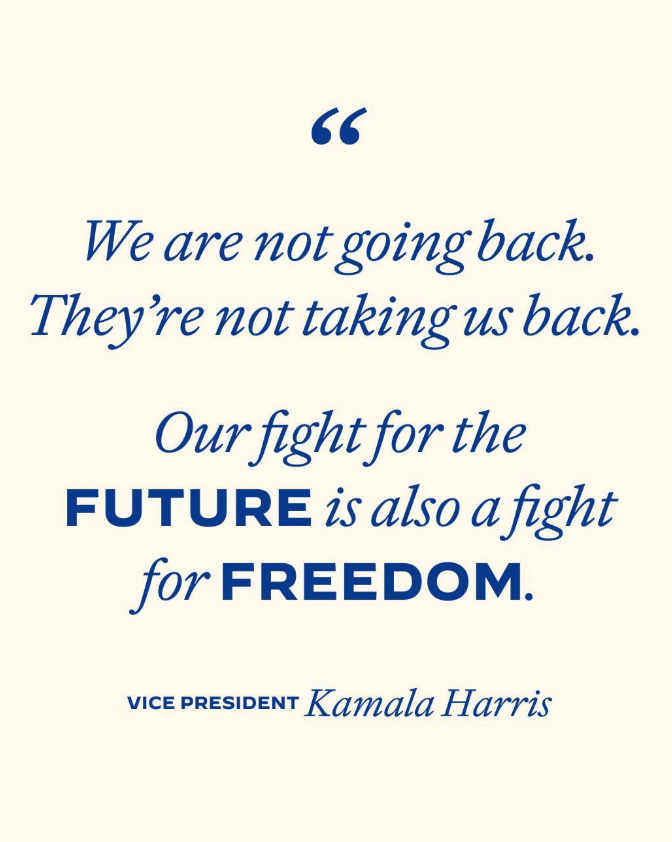
“We are Not Going Back” isn’t just a cute slogan to counter “Make America Great Again.” It was a declaration that our rights will not be eroded without a fight. It’s a defiant refusal to go back to a time where only certain people will be allowed to vote.
But 'not going back' requires seeing the obstacles before we trip over them.
The Supreme Court gutting the Voting Rights Act is the green light for every architect of suppression to start redrawing the lines. If politician’s can’t win the district, they change the boundaries.
This part of the series is about seeing through the lines and understanding exactly how they try to dilute our collective strength.
Gerrymandering is the practice of drawing electoral district maps to give one specific party or group an unfair advantage. Instead of the voters choosing their representatives, gerrymandering allows the representatives to choose their voters.
It happens two ways:
Packing: Cramming as many of the voters of the opposing party into a single district. This in turn “wastes” these votes by letting them win one area, but crushes them everywhere else.
Cracking: Splits a community or group of voters across several districts so their votes are diluted. This ensures they don’t have the majority anywhere to elect a candidate of their choice.
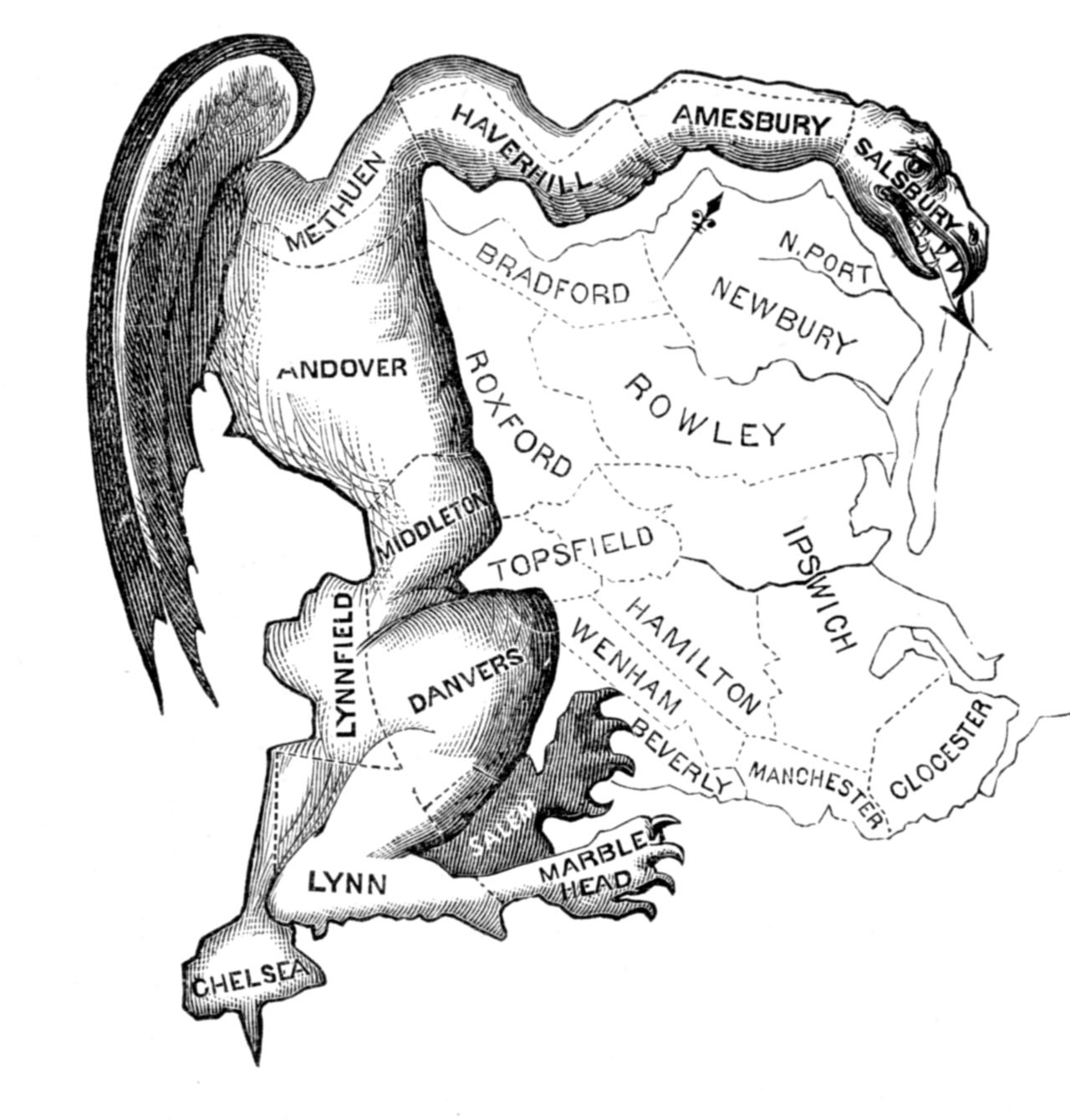
This is a 200 year old tactic that is still weaponized today.
On March 26, 1812 the Boston Gazette released this cartoon as a reaction to the oddly shaped, partisan district that had been redrawn by Governor Elbridge Gerry of Massachusetts. They thought it looked like a mythological salamander and thus Gerry-mander was born.
During the Reconstruction era, gerrymandering was weaponized to neutralize new Black American voters. By "cracking" Black communities into multiple white-majority districts, politicians were able to maintain white supremacy in state legislatures even though the population suggested a different outcome. This continued until the Black Freedom movement — taught in schools as The Civil Rights Movement.
The Voting Rights Act was signed in 1965, it was due to the hard-won result of the Black Freedom Movement’s refusal to accept a system built to exclude them The most powerful tool was Section 5 (Pre-clearance), which forced states with a history of discrimination to get federal approval before changing any district line or voting rule. This led to the most significant jump in Black voter registration and representation in American history.
The erosion of the Voting Rights Act (VRA) started in 2013 by the ruling in Shelby County v. Holder in a 5 to 4 vote. This effectively made Section 5 worthless by striking down Section 4b — the formula used to identify jurisdictions with histories of discrimination. It was called unconstitutional because the formula was based on data over 40 years old, making it no longer responsive to current needs.
In 2019, Rucho v. Common Cause SCOTUS determined that federal courts cannot rule on partisan gerrymandering, deeming it a "political question". Insert eyeroll here.

Now in 2026 in a 6-3 decision down party lines, the U.S. Supreme Court kneecapped Section 2 of the Voting Rights Act. Section 2 allowed voters to sue if an electoral map had a discriminatory effect—meaning if the results of a map unfairly shut out minority voters, it could be struck down regardless of intent.
In today’s ruling, Justice Alito wrote that Section 2 now essentially requires proof of intentional discrimination.
By requiring proof, the Court is asking for a ‘smoking gun’ that mapmakers are usually too smart to leave behind. It doesn’t matter if the result is a map that shuts out millions of Black and Brown voters; if you can’t prove they meant to be racist, the map stands. It’s a return to a system where the outcome is ignored as long as the paperwork looks clean.
Because come on — how many politicians are really gonna admit they redrew it because they’re racist… They essentially created a “See No Evil” policy where all you need is a neutral justification and you’re golden.
In the real world, the effect is the same. Whether its drawn with a fake smile or a sneer, communities voices are erased. Requiring us to prove that a politician is racist vs the evidence of the newly districted map they’ve turned the VRA from a shield to a minor suggestion.
The Hope: Taking the Pen Away
While SCOTUS voluntarily stepped off the field, some states have decided to play the same game. In California, voters decided to take the power to draw lines away from the state legislature entirely. They created an independent commission made up of 14 citizens—Republicans, Democrats, and Independents—who prioritize keeping actual communities together rather than protecting a politician’s seat. Virginia followed a similar path, passing a constitutional amendment to move toward a bipartisan commission that includes both citizens and legislators.
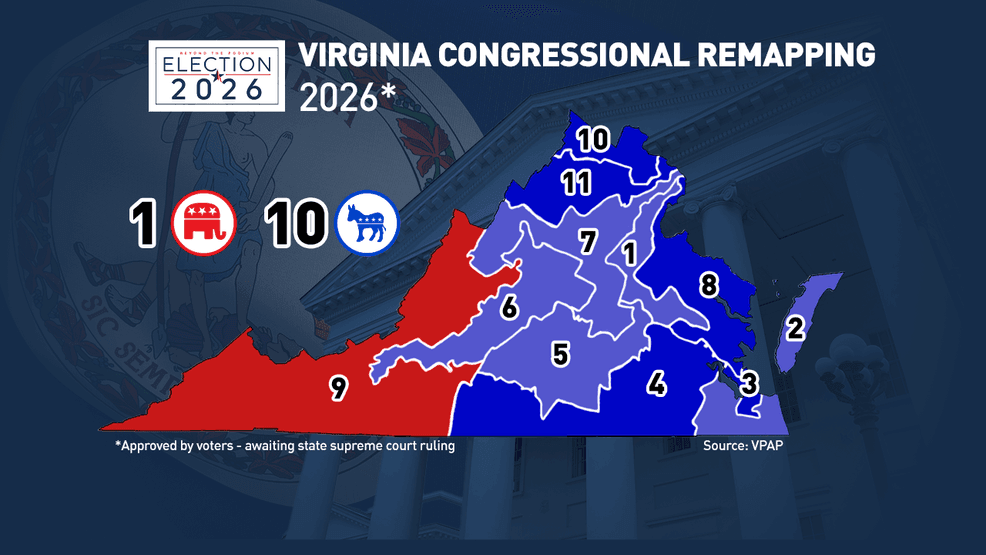
No system is perfect, but“We Are Not Going Back” is a blueprint. We don’t have to wait for a smoking gun or a secret confession from a politician to prove they’re silencing our voices; we can simply remove their ability to redistrict without our approval. By shifting focus to independent oversight and including citizens as well as politicians, we ensure that geography is no longer a tool for suppression, but a reflection of the people who live there.